AdvertisementEyelid care
Tired, dry-feeling eyes by evening? Why warmth comes up so often in eyelid care
What tiny glands along the eyelid margin have to do with the tear film – and how a classic warm-compress tip becomes a 10-minute ritual.
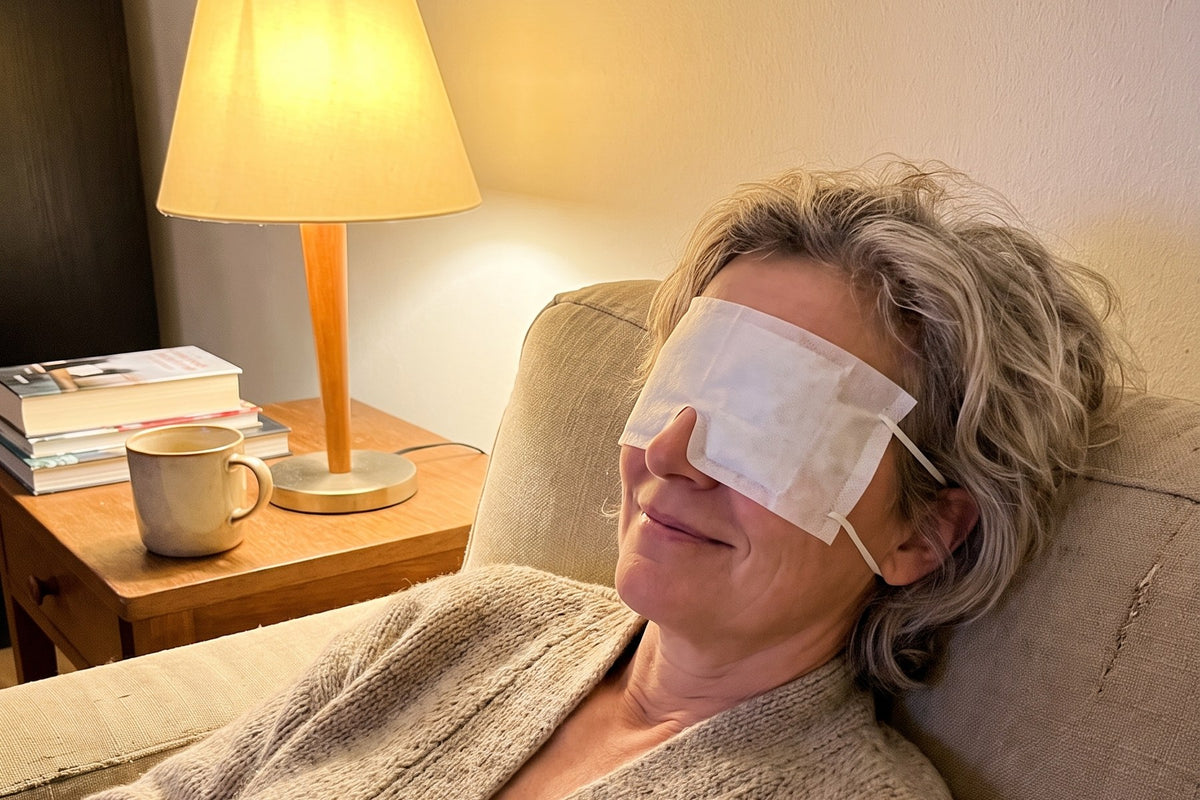
It's just after eight. The laptop is closed, the heat is on, and the eyes feel like they did after a long day at the beach: dry, tired, a little gritty. Out come the eye drops again. They feel good – for a while.
Many people describe their evenings like this, especially from their mid-forties on.
Part of the story sits in a place that rarely gets mentioned: the edge of the eyelids.
The tear film is more than water
The tear film that covers our eyes is built in layers. Johns Hopkins Medicine puts it simply:
"The tears of the eyes are made of three layers: water, oil and mucus."
Johns Hopkins Medicine, "Perimenopause, Menopause and Dry Eyes"Closest to the eye is a mucus layer that helps the film stick. In the middle is the watery layer. And on the outside is a very thin film of oil that helps keep the water underneath from evaporating too quickly.

This oil comes from tiny glands along the eyelid margin, the meibomian glands. With every blink, a little of it is spread across the eye.
Why the topic comes up so often after 45 – and at screens
Two things often come together here. The first is hormones. Johns Hopkins Medicine writes:
"The glands that produce the oil layer of the tears, the meibomian glands, are impacted by the drop in the hormones estrogen, progesterone and testosterone that starts as a woman enters perimenopause."
The second is screens. "Humans normally blink about 15 times in one minute," explains the American Academy of Ophthalmology. "However, studies show that we only blink about 5 to 7 times in a minute while using computers and other digital screen devices." Fewer blinks means the tear film gets refreshed less often. In winter, dry indoor heating adds to it; in summer, it's the AC.

What eye-care sources suggest: warmth for the eyelids
That's why warmth is such a classic eyelid-care step. In its patient advice on eyelid care, the American Academy of Ophthalmology describes the routine like this:
"Wet a clean washcloth with warm water and wring it out until somewhat dry. Place the washcloth over your closed eyes for at least 1 minute. Wet the washcloth as often as needed so it stays warm."
American Academy of Ophthalmology, "What Is Blepharitis?" (2023). General advice on warm compresses, not about a specific product.Johns Hopkins Medicine has a similar evening tip: "Using a gentle warm compress for 8–10 minutes before bed can help increase oil in the tear film."
The background: the oils from the meibomian glands soften with warmth. A 2022 review of eyelid-warming methods also explains why temperature matters: above about 113 °F (45 °C), the risk of heat injury to the eyes or eyelids rises (Bzovey & Ngo, Clinical Optometry, 2022). More heat isn't better – which is one reason to always follow the instructions on the pack.
Why it so often doesn't happen in real life
The tip is simple. Doing it is less so. Heat the water, soak the washcloth, wring it out, put it on – and a few moments later it's cooling down. In a study described in the same review, a warm towel took about six minutes to bring the inner eyelid to about 104 °F (40 °C).

And the routine is meant to be a habit, not a one-off. In a study cited by the review, only 55% of patients were still sticking with warm compresses and lid hygiene after six weeks (Alghamdi et al., 2017, cited in Bzovey & Ngo, 2022).
The idea behind Lidsana
That's where Lidsana comes in. We wanted to make the well-known warm-compress tip so easy that it fits into any day – no kettle, no microwave, no washcloth.
Lidsana is a single-use warm eye mask. Each mask is individually wrapped and warms up by itself once you open the pouch.
- Warms up by itself: open the pouch, put the mask on.
- Individually wrapped: for home, the office or a trip.
- 30 masks per box: 30 days of your warm-eyelid ritual.

How to use Lidsana
- Take out contact lenses and remove eye makeup.
- Open the pouch, unfold the mask and place it over your closed eyes; loop it over your ears.
- Lean back and enjoy about 10 minutes of gentle warmth – follow the instructions on the pack.
- Toss the mask afterward. Each mask is for one use.
Many people make it a fixed ritual: in the morning before coffee, or in the evening before the lights go out (just don't fall asleep with it on).

An honest note
Lidsana is an everyday comfort ritual – not a treatment and not a substitute for an eye exam. If discomfort is strong or doesn't go away, or if an eye hurts, is red, or your vision changes, please see an eye doctor. Don't use Lidsana on injured, inflamed or infected eyes or eyelids. After eye surgery, use it only if your eye doctor says it's OK. If you have diabetes, poor circulation or reduced sensitivity to heat, ask your doctor first. Follow the warnings on the pack.
The offer
One box contains 30 individually wrapped masks. The more boxes, the less you pay per box:
- 1 box (30 masks): $39
- 2 boxes (60 masks): $69 – $34.50 per box
- 3 boxes (90 masks): $89 – $29.67 per box
Shipping within the US is free; delivery takes 4–6 business days. You can return unopened pouches within 30 days of delivery.
Lidsana Warm Eye Mask – self-warming, single-use eye mask for a soothing warm-compress ritual. Follow the instructions and warnings on the pack. Not intended to diagnose, treat, cure or prevent any disease. If you have concerns about your eyes, talk to an eye doctor.